


- About us
- Company details
Scandurra Studio. Sensitive interventions to enhance human life.
Founded in 2001 by Alessandro Scandurra, with offices in Milan and Turin, Scandurra Studio combines architecture, design, innovation and visual culture.
The studio's research starts with experience in set design and installations and then flows into design, from architecture to interiors and design.
The firm recognizes research as a fundamental basis for architectural, urban and product design.
With an international, intergenerational and multidisciplinary team of more than 60 professionals, Scandurra Studio operates globally, collaborating with leading consulting firms.
The design approach is based on a consistent research of cultural and historical references, collected in an iconographic archive, used as a source of inspiration to define the creative line of each project. Interdisciplinary dialogue enriches the firm's work, allowing it to explore every aspect of design, from understanding human needs to creating spaces that respond to evolving requirements, offering new opportunities for use.
Year of establishment:
2018
Number of employees:
FROM 3 TO 9 EMPLOYEES
Annual turnover:
between 0.5 and 2.5 million Euro
Reference year of turnover:
2024
Activities:
Architectural activities
- Videos
- Catalogue
No videos uploaded
No documents uploaded
- Contact Information
- Business Proposals
Company:
SCANDURRA STUDIO ARCHITETTURA SRL
Web site:
Address:
VIALE STELVIO 66
City:
MILANO (MI)
Zip Code:
20159
E-commerce:
Social media:
Tag:
No business proposals uploaded
- Map
NEW – Neighbourhood for Educational Wonder
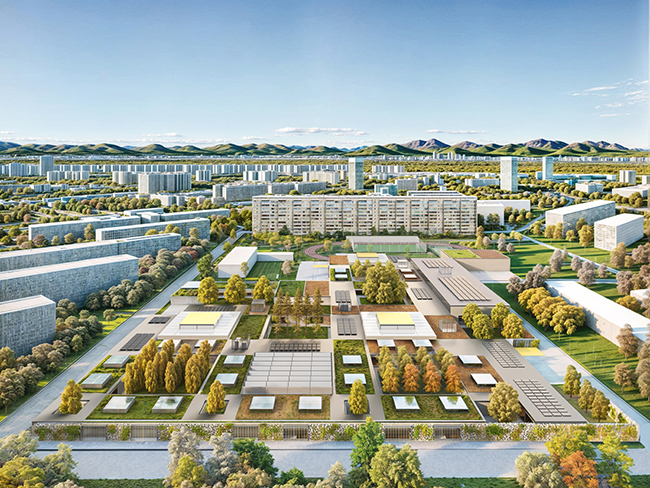
Schools are not just places of learning. They can be welcoming spaces, even shelters, offering assistance, help, psychological and medical support. In conflict contexts, this becomes even more urgent. Architecture must respond quickly and effectively, turning vulnerability into an opportunity for rebirth.
NEW – Neighbourhood for Educational Wonder is the winning project of the international competition Future School for Ukraine, initiated by Lithuanian government for a faster and efficient reconstruction of schools damaged after the invasion of Ukraine, implemented by Central Project Management Agency in partnership with Lithuanian Union of Architects.
The project has been awarded for its adaptability, sustainability, and speed of implementation. Funded by the Lithuanian Fund for Development Cooperation and Humanitarian Aid, it will serve as the blueprint for constructing new schools in Ukraine and will be available to Ukrainian institutions and international partners by mid-2025.
Designed by Scandurra Studio (Italy) in collaboration with Mykhailo Vustianskyi (Ukraine), NEW – Neighborhood for Educational Wonder prototype is replicable, adaptable, scalable, and sustainable.
The design incorporates Design for Disassembly principles and uses prefabricated elements, which support modularity and quick transportation, assembly, and disassembly, significantly reducing construction time and CO2 emissions.
The project is based on a grid of modules, creating a large spatial system that allows for flexible interior configurations within a given perimeter, ensuring adaptable spaces for any need, from individual classrooms to entire masterplans. A test of adaptability successfully integrated the design into two different contexts, proving the prototype’s versatility and responsiveness to the evolving needs of the community.
In its basic configuration, over 10,000 square meters include educational and recreational spaces, as well as areas dedicated to care and civil protection. The design features also hybrid spaces for different educational levels to encourage social exchange and community life. Hallways can be transformed into dynamic spaces for informal learning and social interaction, maximizing space usage.
The courtyards form interconnected internal and external garden spaces, drawing inspiration from the hortus conclusus of convents, and offering moments of beauty and discovery. Central to the design is the interplay of natural light, which seamlessly connects indoor and outdoor environments. These garden spaces function as living laboratories, where the rhythms of nature enrich learning through quiet contemplation.
Externally, the green facades integrate recycled mineral and salvaged aggregates, symbolizing not only the project’s circular economy approach but also the desire to preserve and transform fragments of the conflict into a foundation for a better future. The project follows the Do No Significant Harm (DNSH) guidelines for non-invasive design within local contexts and meets the standards for Nearly Zero Energy Building (nZEB) for energy efficiency.
At the core of Scandurra Studio’s vision is the belief in schools as community laboratories, and in architecture as an educational tool to promote social interaction, creativity, and expression. The winning project embraces the competition’s mission: responding to the devastating destruction of the country’s education system. The project continues Scandurra Studio’s research into the role of architecture in reconciling physical space with its deeper meanings, with education being a key area of ongoing exploration.
Palazzo Spiga
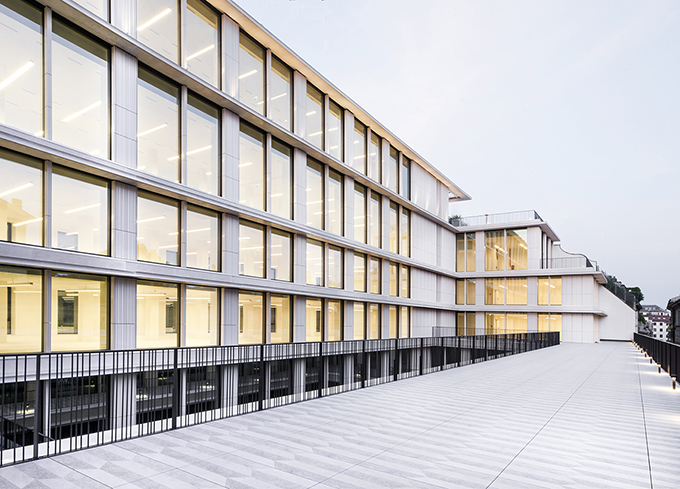
Awarded in 2024 as the winner of the Tile Competition at CERSAIE, Best of Best at the Iconic Awards, and receiving an honorable mention at the BLT Awards, Spiga26 stands as a true landmark in the heart of Milan. Directly engaged by the property, Scandurra Studio has given a new identity to the building at 26 Via della Spiga, enhancing its prestigious role within Milan’s renowned Quadrilatero della Moda. Its commercial spaces, with direct frontage on Via della Spiga, house the flagship stores of leading international fashion brands, while more than 7,000 square meters have been dedicated to Kering’s new headquarters.
The redevelopment project involved reorganising the circulation inside the existing building and recalling the grandeur of Palazzo Pertusati, the sumptuous neoclassical residence designed by architect Simone Cantoni and destroyed during the Second World War. The solutions adopted have both recovered the historical and identity features of the site and improved the building, as confirmed by the LEED Gold Core&Shell environmental certification. The proposal focuses on the transformation of the Via della Spiga façade into a new iconic façade. In order to reconnect with the city’s vital flows, the ground floor has been completely brought back to street level, allowing 18 shop windows to open onto Via della Spiga.
As part of this redesign of the volumes, a floor has been added to the roof: a very calibrated addition, completely glazed, with large overhangs and canopies that integrate the new volume with the existing one. All the new parts are clad with glazed ceramic terracotta modules specially designed for this building, inspired by the caryatid robes of the original building, which give the surfaces an almost tactile sensuality. This external cladding is combined with a golden mirrored glass that offers a monochromatic appearance that is particularly sensitive to variations in natural and artificial light.
The intervention on the façade of Via Senato, on the other hand, is conservative in nature and has focused attention on the ancient relationship between Palazzo Pertusati, its historic garden and the “aristocratic” section of the inner circle of the Navigli, now buried. Thanks to the planting of new essences, the aim was to enhance the link with the historic urban green spaces and to create a filter between the city and the working spaces.
Via Veneto 89
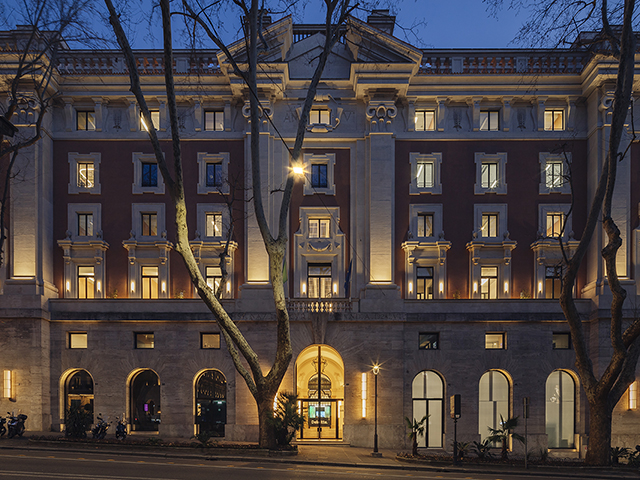
Scandurra Studio presents the regeneration project for Via Veneto 89, a historic building designed by Carlo Broggi in the 1920s, now the new Italian headquarters of Deloitte and Amazon. The redevelopment of the former Palazzo INA results from a sensitive intervention that combines memory and evolution, redesigning spaces and functions to respond to contemporary work needs. Commissioned by Ardian and awarded at The Plan Real Estate Awards, the project promotes architecture as a driver of urban renewal, offering the city a space that looks to the future while enhancing its historical identity.
The design is inspired by Carlo Broggi’s original plans, reinterpreted to meet modern work dynamics. Interior spaces are reorganized to make the building more open and permeable, centered on a central courtyard and a transparent lobby that establish a constant dialogue between inside and outside. Inaugurated in 1927 as one of the first Italian buildings entirely dedicated to offices, the complex is now transformed to host global leaders in professional services and e-commerce, internationally recognized for innovation and technology.
The building’s dual historical and contemporary identity is reflected in the reorganization of circulation. Monumental entrances and vertical connections are enhanced to efficiently distribute users and activities across approximately 19,000 square meters. From two urban fronts at different levels, flows connect to the basement, ground floor, and mezzanine through a distributed system along the sides of the central courtyard, a space of about 200 square meters preserved from the original layout. This reconfiguration restores centrality to the main stairwell, emphasized in its monumental character, while secondary vertical connections are resolved through precise contemporary interventions with decorative elements and custom lighting.
In work and representative spaces, natural light is maximized through careful spatial planning, integrating the structural system into environments that are both complex and flexible. Office areas accommodate diverse needs through multiple configurations, including multifunctional meeting rooms, open-plan spaces, more enclosed areas for privacy, and larger rooms for informal and creative gatherings. Circulation paths are designed to encourage interaction, spontaneous encounters, and the exchange of ideas, reinforcing social connection as a key value of innovation.
On the upper levels, the original principle of progressively set-back façades is recovered and strengthened through selective removals and calibrated volumetric additions. The project also enhances the building’s monumentality through a contemporary reinterpretation of the Via Veneto façade, which invites visual penetration into the interior and expresses the balance between memory and innovation through the redesigned entrance and architectural lighting.
At the core of Scandurra Studio’s vision is the idea of architecture as an open space connected to the city. The new transparent lobby, topped by a skylight that captures light and urban life, invites public engagement and dialogue with the interior. Sustainability is a fundamental aspect of the project: the building is designed to achieve LEED Gold and BREEAM certifications, confirming a strong commitment to environmental responsibility and occupant well-being, while fully respecting heritage constraints.
More than a construction project, the redevelopment of the former Palazzo INA represents a significant opportunity for urban regeneration, strengthening the relationship between companies, employees, and the city, and contributing to the transformation of Via Veneto into a more modern, interconnected, and dynamic urban context.
Villa Patrizi
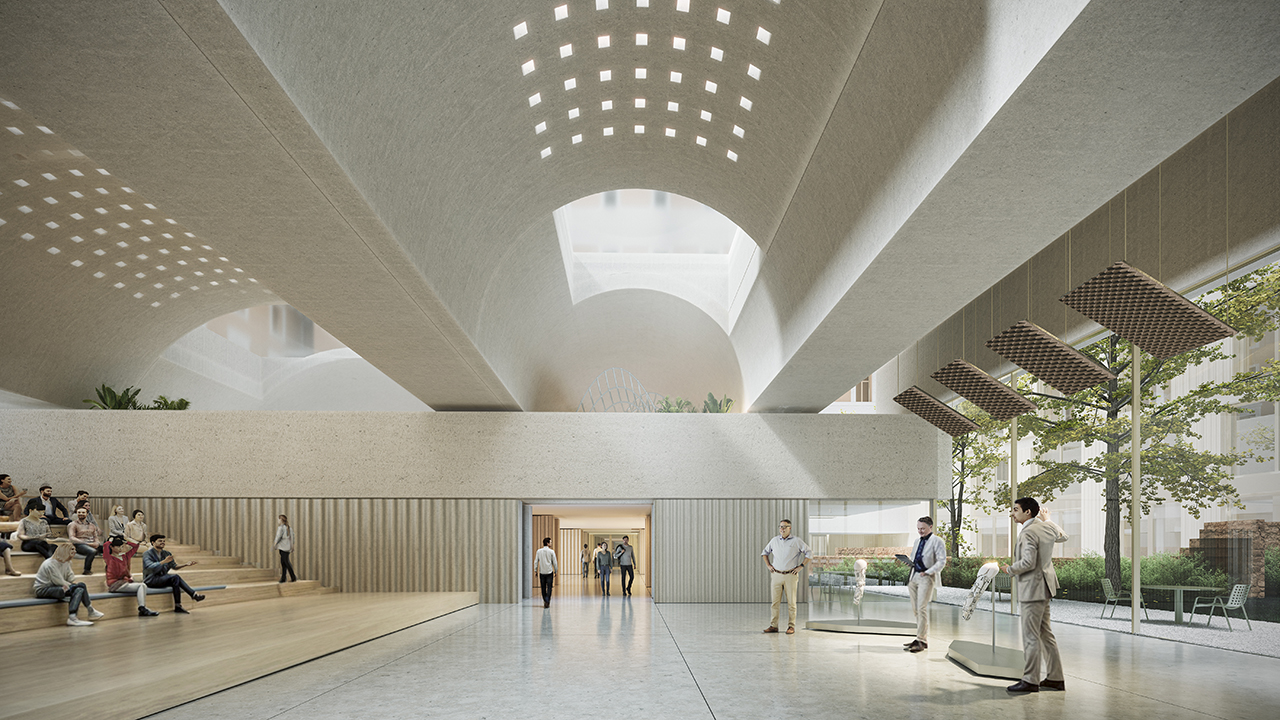
Our vision for Villa Patrizi’s future begins with the vitality of the present, prioritizing the relationship with space and rekindling a dialogue between architecture and the city. We recognize that bringing things together is far more challenging than separating them.
Scandurra Studio presents the project for the regeneration of Villa Patrizi in Rome has been awarded by FS Sistemi Urbani as the best concept for revitalizing the historic complex.
Currently serving as the Roman headquarters of the Italian State Railways, Villa Patrizi is situated in a unique urban context, close to the Aurelian Walls and Porta Pia.
Scandurra Studio’s vision focuses on revitalizing the complex’s four courtyards and reimagining the connections between architecture and the city, promoting accessibility and pedestrian flow through these spaces. Spanning approximately 100,000 square meters, the project will host a mix of uses, including hotels, student housing, retail, and event spaces open to the public. The design concept is rooted in creating a stratification of functions, evolving from the base to a sequence of interconnected, autonomous spaces with renewed significance.
The underground level is transformed into a new ground floor, featuring a series of representative spaces connected to courtyards and gardens that redefine the complex’s focal points. This base level accommodates hybrid and multifunctional spaces that serve the activities hosted within the complex. On the first floor, communal spaces open directly onto a system of hanging gardens, while the second floor, designed as the “noble floor,” boasts high ceilings, accommodating lobby areas and prestigious areas for representation.
A newly constructed volume introduces a grand entrance on the base level facing Porta Pia, unveiling a hidden facade and establishing a connection to a new commercial gallery. This addition enhances the relationship between the complex and the surrounding urban fabric, creating a dynamic dialogue with the city.
Oasi Isola
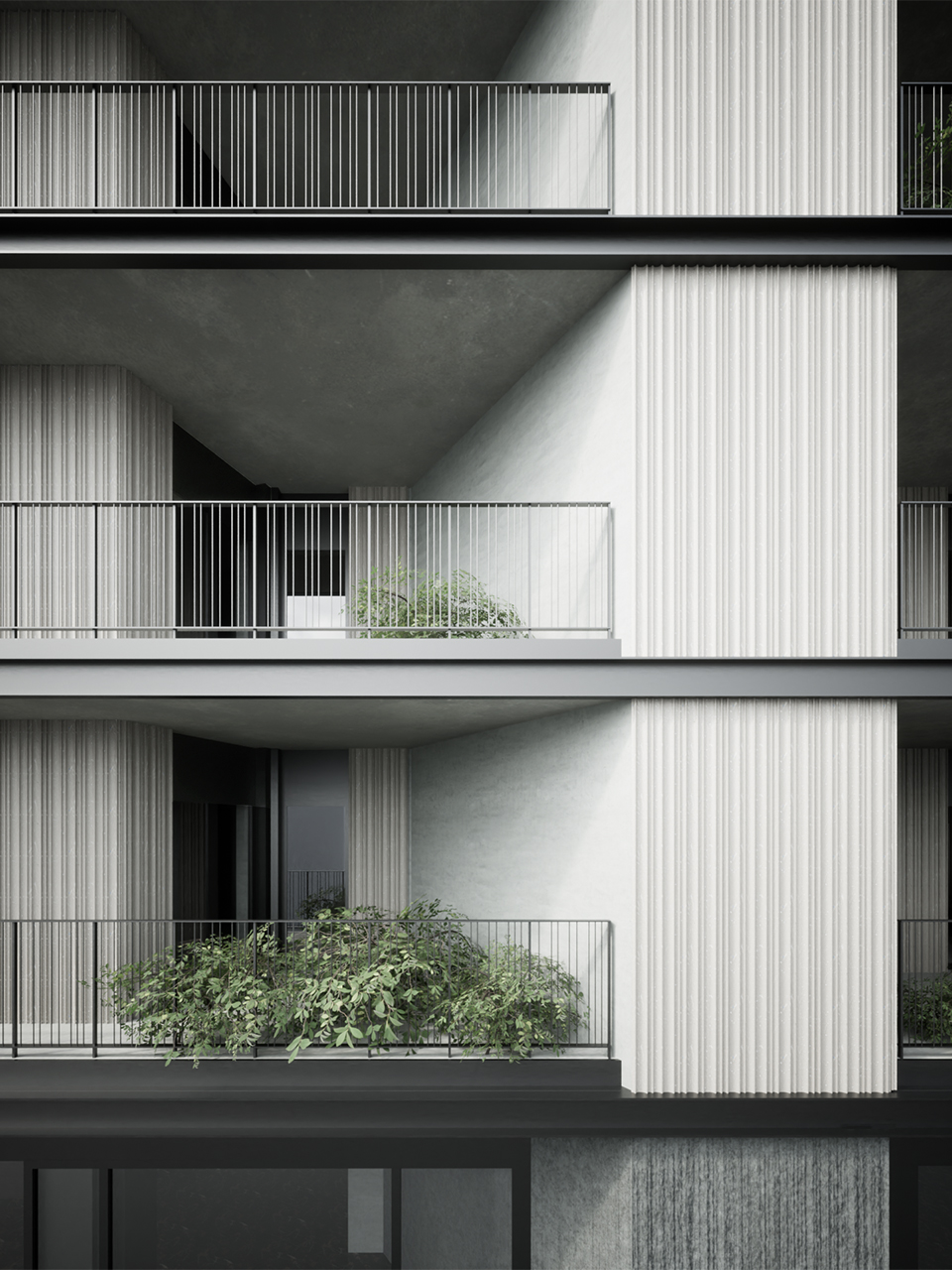
The Oasi Isola redevelopment project, nearing completion on Via Alserio and Via Bassi in Milan, stands out for its ambition to transform an entire block and its ability to engage with the urban and landscape context, offering new opportunities for users and the community.
Originally established as an industrial hub in the 1940s, the complex experienced gradual abandonment, leading to the erosion of the area’s vitality. Today, it regains new energy through redevelopment. The conversion of spaces from commercial to residential use represents a profound rethinking of the relationships between buildings, green spaces, and public areas, aiming to restore vibrancy to a once closed and impermeable site.
The main idea is to free the central courtyard from built structures, increasing green areas and improving both visual and physical accessibility. The demolition of certain buildings and the reduction of built mass have made it possible to create gardens and open spaces with a strong ecological focus. The volumes, positioned along the edges of the lot, maximize the internal voids, establishing a new connection between the city and nature. The façades on Via Alserio and Via Bassi align with the surrounding buildings, while the setback of the top floor and the oblique loggias optimize light, ventilation, and continuity between indoor and outdoor spaces.
The internal façades, designed to host vegetation, create a hybridization between architecture and nature, with patios and terraces transformed into green oases. The rooftops also become green gardens, seamlessly integrating with the surrounding landscape. The building on Via Bassi is characterized by a formal compactness that contrasts with the lightness of the other volumes, bringing balance to the overall composition. Every decision, from the spatial layout to the architectural details, aims to make the project a model of harmony between urban solidity and the transparency of the new green spaces.
The development includes apartments of various types, urban villas with private gardens, and commercial spaces, organized to meet diverse residential and functional needs. The central courtyard, primarily dedicated to greenery, is designed as a gathering place for the community, featuring covered pathways that connect the main volumes without compromising the quality of the green spaces. Oasi Isola thus becomes an example of integrated architecture, capable of regenerating the urban environment with sustainability, accessibility, and a focus on quality of life.